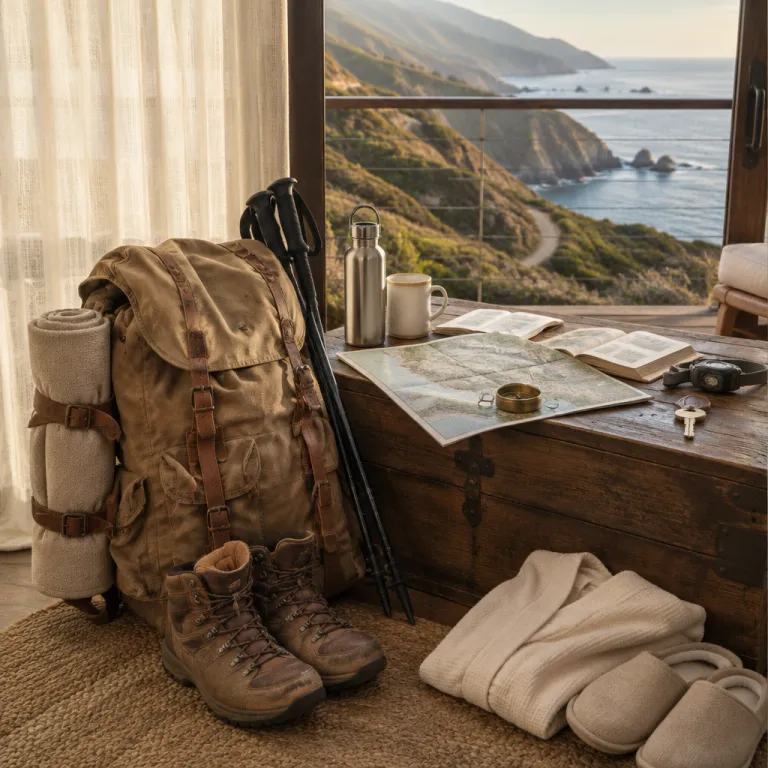
Planning a backpacking trip in Big Sur from a hotel base
Backpacking in Big Sur begins long before your boots touch a trail. Thoughtful hikers pair their hotel choice with the exact backpacking route, elevation gain, and access to the Big Sur River or coast they want to explore. When you align your overnight base with your planned loop or point to point trip, every day on the ridge or along a creek feels smoother and far more rewarding.
Start by deciding whether your backpacking trip will focus on coastal views or the interior Santa Lucia peaks. If you want fast access to the Vicente Flat area, the Pine Ridge Trail, or the classic ridge trail above the Sur River, choose a hotel south of the Big Sur village to shorten your morning transfer. For routes toward Silver Peak Wilderness, Salmon Creek, or Spruce Creek, a room closer to the southern highway segment reduces driving time and lets you reach the trailhead at first light.
Once you know your preferred trail network, study a detailed topographic map and recent reports on conditions. Look for information about water at creek camp sites, the state of each creek trail, and any closures near Cone Peak or Lion Den due to fire or erosion. The Los Padres National Forest Big Sur Ranger District and California State Parks post current closure maps, fire restrictions, and trail advisories on their official websites, which you can cross-check against printed maps from guidebooks.
Many visitors underestimate how big the region feels once you leave Highway 1. Distances between a hotel, a remote camp such as Buckeye Camp or Barlow Flat, and a high peak can be deceptive on a small map, especially when the route includes steep gain and narrow ridge sections. Ask your hotel about realistic day start times, parking availability at the trailhead, and whether early breakfast or takeaway options are available for backpacking guests.
Choosing a hotel near the right trailheads and easy day hikes
Where you sleep shapes every day of backpacking in Big Sur, especially if you mix hotel nights with wilderness camp nights. A well located property near key trailheads lets you warm up on an easy day hike before committing to a multi day backpacking trip deeper into the backcountry. This balance is ideal for guests who want strong views and wild ridges but still value a hot shower and a real bed between demanding stages.
Look for hotels that sit within a short drive of classic access points such as the Pine Ridge Trail, the Vicente Flat Trail, and the Salmon Creek and Spruce Creek corridors. When you can reach a ridge trail or creek trail in under 30 minutes, you gain precious daylight for climbing toward a peak or exploring a shaded river canyon. For a curated overview of properties close to gentle paths and family friendly loops, consult this guide to easy hikes in Big Sur and hotels near the trails.
If you are new to backpacking, consider structuring your trip around short out and back routes from a single hotel base. Spend one day following the Sur River upstream toward redwood camp style groves, another day exploring a coastal loop with sweeping coastal views, and a third day scouting future camp locations such as creek camp clearings. This pattern lets you test your gear, understand local conditions such as poison oak density, and refine your map reading before committing to a heavier pack and a night at Buckeye Camp or Barlow Flat.
Before you book, turn the usual hotel questions into a simple backpacker checklist: confirm secure parking for cars left overnight, ask about luggage storage for items you will not carry, check whether early breakfast, coffee, or packed lunches are available, and see if staff can share shuttle contacts or taxi numbers for one way routes. Local transport options change frequently, so verify current services with the Monterey-Salinas Transit (MST) route listings and any regional taxi or rideshare operators that serve Big Sur. When a hotel understands the rhythm of backpacking in Big Sur, your transition between camp and comfort becomes seamless rather than stressful.
Iconic backpacking routes, camps, and where to stay nearby
Certain routes make backpacking in Big Sur feel almost mythic, and your hotel choice can frame these journeys beautifully. The Pine Ridge Trail toward Barlow Flat, Redwood Camp, and the remote hot springs once defined the classic Big Sur backpacking trip, although access and conditions now change frequently. Before booking, confirm whether sections of Pine Ridge or the connecting ridge trail toward Cone Peak are open by checking the Los Padres National Forest Big Sur Ranger District alerts page and any current California State Parks notices.
South of the main village, the Vicente Flat Trail climbs from the ocean toward a sheltered camp beneath towering trees. Many hikers base themselves at a nearby coastal hotel, hike from sea level to Vicente Flat Camp with a steady gain, then return to a soft bed after a long day on the ridge. Others extend the route into a loop by linking higher ridge sections and returning via a different creek trail, which requires careful map work and attention to water sources.
Farther south, Salmon Creek and Spruce Creek offer shorter but steep approaches into Silver Peak Wilderness. Here, hotels near the southern Big Sur coastline give you quick access to trailheads that lead toward Silver Peak itself, Buckeye Camp, and other creek camp clearings with strong views of both forest and sea. For inspiration on which Big Sur trails justify planning an entire trip, review this detailed overview of Big Sur trails worth planning a whole trip around.
Some advanced hikers link Cone Peak, Lion Den, and nearby ridge systems into demanding multi day loops. If you are considering such a route, choose a hotel that can host you both before and after the wilderness section, allowing time to sort gear, dry clothes, and review photos from the high peak. The contrast between a remote camp under pine branches and a final night in a refined coastal room often becomes one of the most vivid memories of backpacking in Big Sur.
Managing terrain, elevation gain, and seasonal conditions
The terrain of Big Sur rewards preparation, and smart hotel planning helps you manage its challenges. Trails often climb quickly from sea level to a ridge, with elevation gain that feels relentless under a full backpacking load. When you can rest in a comfortable room before tackling a steep route, your first day toward a peak or remote camp becomes safer and more enjoyable.
Study recent information on trail conditions, especially after storms or extended heat. Sections near the Sur River, Salmon Creek, and Spruce Creek can suffer from washouts, fallen pine trunks, or overgrown poison oak that narrows the route. Hotels that host many hikers usually hear early reports about blocked ridge trail segments, closed hot springs access, or muddy creek crossings, and they can often point you toward a safer alternative loop.
Seasonality matters as much as terrain when backpacking in Big Sur. In wetter months, creek levels rise and some river crossings near redwood camp style groves become hazardous, while in drier periods you may find fewer reliable water sources near ridge camps such as Buckeye Camp or Barlow Flat. Align your hotel booking with the likely water conditions, so you can adjust from a planned backpacking trip to a series of ambitious day hikes if the creeks or the Sur River run too high or too low.
Heat is another factor, especially on exposed slopes below Cone Peak or along the Vicente Flat ascent. Consider hotels that offer early breakfast so you can reach the ridge before the sun becomes intense, and return in time to cool off and review your photos from the day. When you respect the scale of this landscape and plan around its conditions, backpacking in Big Sur feels challenging yet comfortably within reach.
Balancing wilderness camps with hotel comfort
One of the great pleasures of backpacking in Big Sur is alternating between wild camps and refined coastal stays. Many travelers spend a first night in a hotel, hike into a creek camp or ridge camp for one or two nights, then return to the same property to rest and reorganize. This pattern lets you experience the full drama of Big Sur peaks and rivers without sacrificing sleep quality for your entire trip.
Popular wilderness options include Buckeye Camp above the coast, Redwood Camp and Barlow Flat along the river corridor, and more remote sites near Lion Den or the slopes of Cone Peak. Each camp offers different views, from dense pine and redwood groves to open ridges with sweeping coastal views, so match your hotel location to the trailhead that serves your chosen camp. When you check in, confirm whether the front desk can store luggage you will not carry on your backpacking trip, which keeps your pack lighter on steep gain sections.
Some couples pair a night at a romantic coastal hotel with a short backpacking loop to a quiet creek camp, turning the journey into a memorable celebration. If you are considering an intimate ceremony or elopement woven into a backpacking trip, consult this guide to unforgettable coastal stays near Big Sur elopement locations. Returning from a ridge trail or creek trail to a room with a view of the Sur River mouth or the open Pacific can feel like a reward for every kilometre climbed.
When you alternate between camp and hotel, pay attention to drying gear and managing any exposure to poison oak picked up along narrow trails. Use your hotel balcony or drying racks to air tents and boots, and sort photos and maps from the previous day while planning the next route. This rhythm of effort and comfort turns backpacking in Big Sur into a sustainable way to explore rather than a single exhausting push.
Photography, safety, and practical hotel tips for backpackers
Backpacking in Big Sur is a gift for photographers, and your hotel can function as a base for editing and gear care. From the ridge above Vicente Flat to the summit slopes of Cone Peak, the views invite careful composition and multiple photos at different times of day. When you return to your room, you can back up images, charge batteries, and plan the next sunrise or sunset location along your chosen route.
Safety begins with realistic planning and continues with small decisions at your hotel each evening. Repack your backpacking kit with the next day in mind, checking your map, headlamp, and water treatment before you are back on a trail that climbs toward a remote peak or crosses a fast moving creek. Many properties offer early coffee or packed lunches, which help you leave before dawn to reach a ridge or river crossing during the safest light.
Always ask staff about recent wildlife sightings, fire restrictions, and any reports of unstable conditions on nearby trails. They may know whether a section near Salmon Creek, Spruce Creek, or the Sur River has suffered slides, or whether a popular hot springs area is currently closed to protect the environment. For official updates, review the latest notices from California State Parks, Los Padres National Forest, and Monterey County emergency information pages before you set out.
Finally, respect the fragile ecosystems you pass through, from redwood camp groves to exposed ridge trail segments in Silver Peak Wilderness. Stay on established paths, avoid trampling creek banks, and carry out all waste so that future guests can enjoy the same pristine views and quiet camps. With the right hotel partner and a thoughtful approach, every backpacking trip here can balance comfort, safety, and a deep connection to this remarkable stretch of the California coast.
Key statistics about hiking and backpacking in Big Sur
- The Big Sur segment of the Los Padres National Forest contains more than 560 kilometres of official trail, giving hotel based hikers a wide range of day hikes and multi day backpacking routes (estimate based on United States Forest Service trail inventories for the Monterey Ranger District; always consult current USFS maps and the Los Padres National Forest Motor Vehicle Use Map for updated mileage).
- Elevation gain on popular routes such as the Vicente Flat Trail and sections toward Cone Peak often exceeds 900 metres in a single day, which makes pre trip conditioning and careful pacing essential for visitors who are not accustomed to steep coastal mountains (figures compiled from regional hiking guidebooks, including Tom Stienstra’s California hiking guides, and topographic data from USGS maps; verify against the latest trail descriptions before you go).
- Reports from the California Department of Parks and Recreation indicate that summer weekends can see day use parking at major Big Sur trailheads reach capacity by mid morning, so hotel guests who start before 08:00 significantly improve their chances of finding legal parking and enjoying quieter trails (check current advisories and parking updates on official California State Parks and Los Padres National Forest websites).
- Summaries from Monterey County Search and Rescue and other regional SAR teams note that dehydration and navigation errors account for a large share of incidents in the Santa Lucia Range, underscoring the importance of carrying detailed maps, extra water capacity, and letting hotel staff or friends know your planned route (consult the latest safety bulletins from Monterey County Sheriff’s Office and local search and rescue organisations for precise figures).
- Monitoring by local conservation groups and trail stewardship organisations, such as the Ventana Wilderness Alliance, has documented that staying on established trails reduces erosion rates on steep Big Sur slopes by more than 50 percent compared with informal shortcuts, which means responsible route choices by backpackers directly protect the landscape they come to experience (review recent reports and stewardship updates from these groups for updated erosion and trail impact data).
FAQ about backpacking in Big Sur from a hotel base
How many days should I plan for backpacking in Big Sur if I stay in a hotel ?
A balanced itinerary pairs two or three hotel nights with one or two nights in the backcountry. This gives you time for a warm up day hike, a one or two night backpacking loop or out and back route, and a final recovery day along the coast. Shorter trips are possible, but most guests feel they need at least three full days to appreciate both the trails and the comfort of their chosen property.
Which Big Sur trails are best for first time backpackers staying in hotels ?
First time backpackers often start with moderate routes such as the lower sections of the Pine Ridge Trail, the approach to Vicente Flat, or shorter options near Salmon Creek and Spruce Creek. These trails offer clear navigation, reliable water sources in many seasons, and the option to turn a planned overnight into a long day hike if you prefer to return to your hotel. Always check current conditions with park authorities and your hotel before setting out.
How do I manage my car and luggage while I am camping overnight ?
Most hotels in the Big Sur area allow guests to leave cars in on site parking while they spend a night or two in the backcountry, but you should confirm this policy when booking. Ask whether the property can store luggage that you do not want to carry to camp, and keep valuables out of sight in your vehicle. Some travellers also inform the front desk of their planned return day and route as an extra safety measure.
What is the best season for backpacking in Big Sur with a hotel base ?
Spring and autumn usually offer the most comfortable combination of temperatures, water availability in creeks and rivers, and clearer coastal views. Summer can be hot on exposed ridges, while winter storms may close certain trails or make river crossings unsafe. Whenever you visit, align your hotel booking with a flexible plan so you can switch between backpacking and day hiking if conditions change.
Do I need special permits for backpacking in Big Sur ?
Permits are not required for most backcountry camps in the Los Padres National Forest section of Big Sur, but regulations can change and fire restrictions are common. Some nearby state parks may have specific rules about camping zones, stove use, and parking, so always check with official park offices or the latest notices from land managers before finalising your route. Your hotel can often point you toward the correct authority for the exact area you plan to visit.