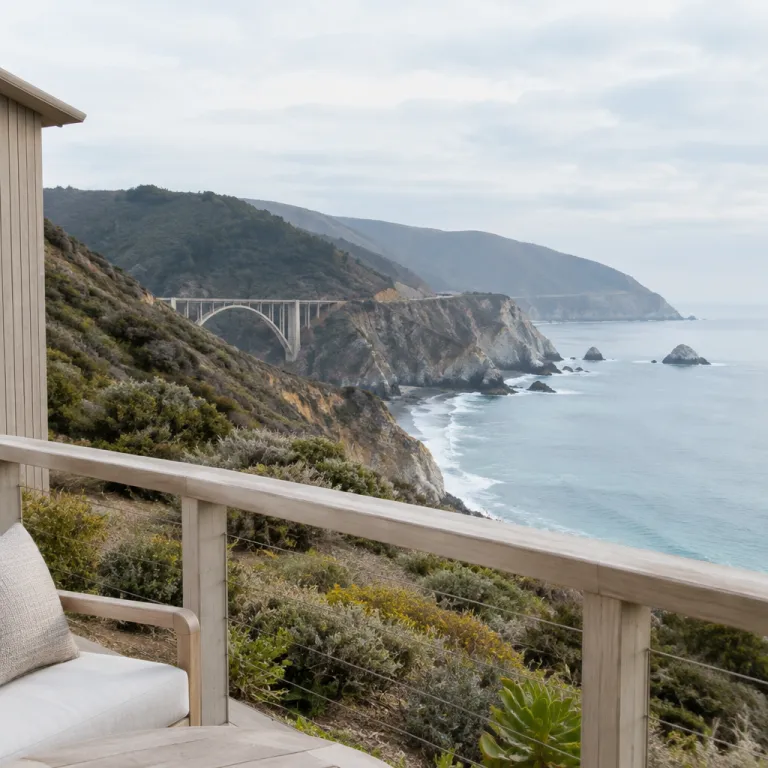
Iconic coastal drives and landmark views near your Big Sur hotel
When you book a stay along the Big Sur coast, the first question is simple yet exciting. Which places to see in Big Sur should shape your driving route along Highway 1, and how can you align those stops with the most atmospheric coastal hotels. This rugged stretch of sur California offers a 145 kilometre ribbon of road where every curve reveals another beautiful place to pause, breathe, and take in the Pacific.
The most photographed landmark is Bixby Bridge, whose graceful concrete arch rises about 79 metres above a deep canyon and frames one of the most dramatic views in California. You cannot stop on the bridge itself, but a designated pullout on the ocean side lets you step out of your car, feel the wind, and capture the kind of image that defines many guests’ first day in Big Sur. Time your visit for early morning or late afternoon, when the light softens the cliffs and the traffic on the highway is lighter.
Driving south from the Monterey Peninsula, you will find that this northern gateway quickly shifts from cypress lined suburbs to raw cliffs and turquoise coves. Many travellers choose a hotel in the Carmel area for the first night, then continue into the heart of Big Sur the next day to stay closer to the main places to see in Big Sur. This two stop approach turns the coastal highway into a relaxed day trip rather than a rushed transit, and it gives you time to enjoy both the refined charm of Carmel by the Sea and the wilder character of the Big Sur area.
For guests who value flexibility, staying near the northern end of Big Sur makes it easy to combine iconic viewpoints with urban comforts in Monterey, California. You can spend the morning exploring Cannery Row and the historic waterfront, then drive south in the afternoon to watch the sunset from a quiet pullout near Bixby Bridge. In the evening, return to your hotel restaurant in town or dine at a cliffside restaurant Big Sur is famous for, pairing local seafood with sweeping ocean views.
Highway 1 through Big Sur has fully reopened, but conditions can change quickly after storms or landslides. Before you set out from your ranch inn or coastal lodge, always check the latest road updates from Caltrans and ask your front desk for local advice on any temporary closures. This simple habit ensures that the places to see in Big Sur on your personal list remain safely accessible during your stay.
Waterfalls, coves, and beaches that shape where you stay
Many travellers choose their hotel in Big Sur based on proximity to the most celebrated natural sights. If you are drawn to waterfalls and sheltered coves, then the area around Julia Pfeiffer Burns State Park becomes a natural base, because it places you close to McWay Falls and several quieter viewpoints. This part of sur California feels especially remote at night, when the stars replace city lights and the only sound is the surf below the cliffs.
McWay Falls drops about 24 metres from a rocky bluff directly into a turquoise cove, creating one of the most recognisable places to see in Big Sur. At the moment, the main overlook trail is under repair, yet you can still see the waterfall from roadside viewpoints just north of the park entrance, which is why local guidance notes that “Can I see McWay Falls without hiking? Yes via roadside viewpoint on Highway 1 just north of park entrance”. When you book accommodation nearby, ask whether staff can suggest the best time of day for the clearest view, as fog and backlighting can change the experience dramatically.
Beach lovers often focus on hotels that offer easy access to Pfeiffer Beach, Sand Dollar Beach, or the coves of Garrapata State Park. Pfeiffer Beach is famous for its purple tinged sand and a natural rock arch that glows at sunset, while Sand Dollar Beach is the largest sandy beach in Big Sur and ideal for a relaxed picnic day. Garrapata’s mix of bluffs, wildflowers, and pocket beaches makes it one of the most varied places to see in Big Sur, especially if you enjoy short walks rather than long hikes.
Choosing a hotel near these beaches means you can visit early or late, when parking is easier and the light is softer. A coastal ranch inn above the shoreline lets you walk down to the sand for sunrise, then return for breakfast at the hotel restaurant before setting out to other state park trails. If you prefer more amenities, staying closer to the Monterey Peninsula or Carmel by the Sea gives you a wider choice of dining options while still keeping the main beaches within a comfortable day trip.
Whale watchers and wildlife enthusiasts often time their stays around migration seasons, when the waters off Big Sur come alive with spouts and tail slaps. For detailed guidance on where to stay for Big Sur’s whale season and how to pair marine life viewing with coastal comfort, consult specialised planning resources such as this guide to where to stay for Big Sur’s whale season. Aligning your hotel choice with the specific natural spectacles you want to see turns a simple beach holiday into a carefully curated coastal experience.
Redwood forests, state parks, and how they influence hotel choices
Not every visitor comes to Big Sur only for ocean views. Many guests are equally captivated by the towering redwoods and the quiet trails that wind through state park forests and state natural reserves. If that sounds like you, then the most meaningful places to see in Big Sur will likely be shaded canyons rather than open headlands.
Pfeiffer Big Sur State Park sits inland from the highway along the Big Sur River, and it offers a network of trails beneath redwoods, oaks, and bay laurel trees. Staying near this park gives you easy access to morning walks before the day trip crowds arrive, and it also shortens your drive to other forested areas such as Andrew Molera State Park and the inland sections of Garrapata. The combination of river, forest, and nearby coast makes this central valley one of the most versatile bases in the entire Big Sur area.
Further south, Julia Pfeiffer Burns State Park combines redwood groves with those famous coastal cliffs, so a hotel nearby lets you enjoy both forest shade and ocean panoramas in a single day. The park’s trails vary from short viewpoint walks to longer routes that climb into the hills, giving you options whether you prefer gentle strolls or more demanding hikes. When you plan your stay, ask your chosen property about current trail conditions, because some routes can close temporarily after storms or maintenance work.
To the north, Point Lobos State Natural Reserve near Carmel is often described as the crown jewel of the California state park system. Here, cypress groves lean over turquoise coves, sea lions bark from offshore rocks, and well maintained paths make it one of the most accessible places to see in Big Sur’s wider region. If you stay in Carmel by the Sea or on the edge of the Monterey Peninsula, you can reach Point Lobos in minutes, then continue south along the highway for a full coastal circuit.
Guests who are unsure whether to prioritise forest seclusion or cliff top drama can benefit from curated advice on lodging styles. Resources such as this in depth guide on how to pick where you sleep in Big Sur compare cliffside cabins, redwood canyon retreats, and more traditional hotels. Using such comparisons, you can match your preferred state park access, driving time, and desired level of solitude with the right part of the coast.
Monterey, Carmel, and urban comforts around the wild coast
While Big Sur itself feels remote, most journeys begin or end in the more developed towns of Monterey and Carmel. These hubs on the Monterey Peninsula offer a different set of places to see compared with the raw cliffs further south, yet they play a crucial role in shaping your overall itinerary. Many travellers choose to spend their first or last night here, using the urban comforts as a soft landing before or after the wilder stretches of sur California.
In Monterey, Cannery Row and the historic waterfront provide a compact area of attractions, restaurants, and hotels within walking distance of the bay. You can stroll past former sardine factories converted into shops and tasting rooms, then enjoy fresh seafood at a restaurant big enough to handle groups yet still focused on local catch. From here, it is an easy drive to the main places to see in Big Sur, making Monterey a practical base if you prefer shorter day trips rather than changing hotels every night.
Carmel by the Sea offers a different atmosphere, with storybook cottages, art galleries, and a wide sandy beach at the end of Ocean Avenue. Many guests choose Carmel as their primary base because it combines a walkable village feel with quick access to Point Lobos State Natural Reserve and the northern Big Sur coastline. If you stay here, you can enjoy a leisurely breakfast in town, then set out along Highway 1 to visit Bixby Bridge, Garrapata State Park, and other coastal viewpoints before returning to your room in the evening.
Some travellers split their time between a hotel in Carmel and a more secluded property deeper in Big Sur, creating a layered experience of both culture and wilderness. This approach works especially well if you want to sample several hotel restaurant styles, from refined dining in town to rustic coastal terraces overlooking the waves. For inspiration on combining different coastal communities and lodging types into one elegant itinerary, consult curated planning resources such as this guide to elegant coastal escapes and where to stay in Big Sur.
Whether you base yourself in Monterey, Carmel, or the heart of Big Sur, remember that driving times can feel longer than the distances suggest. The highway is winding, and you will often want to stop at unmarked pullouts to enjoy an unexpected view or a quiet beach. Building in generous time between the main places to see in Big Sur ensures that your days feel unhurried and that you return to your hotel ready to savour the evening rather than simply collapse from the drive.
Dining with a view and how restaurants shape your stay
For many guests, the most vivid memories of Big Sur involve not only the scenery but also the meals enjoyed with a sweeping ocean view. Choosing a hotel with an excellent on site restaurant or easy access to renowned coastal dining can transform your stay from pleasant to unforgettable. When you evaluate places to see in Big Sur, it is worth giving equal thought to the places where you will sit down, linger, and taste the region.
Nepenthe is perhaps the most famous restaurant Big Sur offers, perched high above the water with terraced seating that faces the endless horizon. Arriving here from your hotel along the highway feels like entering a cliff top amphitheatre, where the performance is the changing light on the sea rather than any staged entertainment. Many travellers plan their day around a late lunch or early dinner at Nepenthe, combining a visit to nearby Pfeiffer Beach or Pfeiffer Big Sur State Park with a leisurely meal.
Several coastal lodges and inns operate their own hotel restaurant spaces that are open to both guests and non residents. Staying on site means you can enjoy a glass of wine at sunset without worrying about driving the winding road back to another area after dark, which is a significant comfort for many visitors. When you compare properties, look beyond room photos and ask about the restaurant’s view, menu focus, and whether it offers breakfast with a panorama of the carmel sea or the Big Sur cliffs.
In Monterey and Carmel, the dining scene is more varied, with everything from casual cafés to fine dining rooms that highlight local produce and Pacific seafood. You might spend one day exploring Cannery Row, then return to a ranch inn style property in the hills for a quieter evening under the stars. This contrast between lively urban restaurants and tranquil coastal dining gives your trip a rhythm that mirrors the contrast between the busy highway and the silent coves.
Wherever you stay, consider making reservations for the most popular restaurants during peak seasons, especially if your hotel does not have its own dining room. Ask the front desk for advice on timing your meals around sunset and fog patterns, because the same terrace can feel entirely different on a clear evening compared with a misty one. Aligning your culinary plans with the key places to see in Big Sur ensures that each day ends as beautifully as it begins.
Practical planning for hotel guests exploring Big Sur’s highlights
Thoughtful planning allows you to enjoy the most iconic places to see in Big Sur without feeling rushed or overwhelmed. Start by deciding how many nights you want to spend in the region, then divide your time between one or two strategic bases such as Carmel, Monterey, or a central Big Sur valley near Pfeiffer Big Sur State Park. This structure lets you balance driving time, relaxation, and access to both beaches and forests.
From a central hotel, you can plan themed days that each focus on a specific cluster of attractions. One day might centre on Bixby Bridge, Garrapata State Park, and Point Lobos State Natural Reserve, while another day highlights Julia Pfeiffer Burns State Park, McWay Falls, and Sand Dollar Beach. A third day could be reserved for slower pleasures such as a long lunch at a coastal restaurant, a gentle walk through redwoods, or simply watching the changing light from your room’s balcony.
Parking can be limited at many trailheads and beach access points, especially during weekends and holidays. Staying nearby allows you to arrive early, secure a space, and enjoy the area before the main crowds appear, then return to your hotel for a midday rest. In the afternoon, you can head out again to a different state park or viewpoint, making the most of the softer light and often calmer conditions.
Weather along the Big Sur coast can shift quickly, with fog rolling in and out several times a day. Pack layers, including a windproof jacket, and keep a small day bag ready in your room so you can adapt plans quickly if a particular beach or viewpoint is shrouded in mist. Your hotel staff will usually have up to date knowledge of which areas are clearer at any given time, and their local insight can be as valuable as any guidebook.
Finally, remember that Big Sur is more than a checklist of famous stops. The most meaningful moments often happen between the headline places to see in Big Sur, perhaps at an unnamed pullout where you watch pelicans glide past or at a quiet bend in the river near your lodge. By choosing accommodation that aligns with your interests and by allowing space in your schedule for unplanned pauses, you give yourself the best chance of experiencing the coast in a way that feels both personal and deeply restorative.
Key figures for planning your Big Sur hotel stay
- The scenic stretch of Highway 1 commonly referred to as the Big Sur coast runs for about 90 miles, or roughly 145 kilometres, between Carmel and San Simeon, which helps you estimate realistic driving times between hotels and viewpoints (source: Visit California).
- Bixby Bridge’s main arch rises approximately 260 feet, or about 79 metres, above the canyon floor, making it one of the tallest and most visually striking concrete bridges on the California coast (sources: Tripadvisor and Wandering California).
- McWay Falls in Julia Pfeiffer Burns State Park drops around 80 feet, or about 24 metres, from the cliff to the cove, which explains why it remains one of the most photographed waterfalls along the Pacific Coast (sources: Wandering California and Seatosequoia).
- Highway 1 through Big Sur has fully reopened after past closures, but short term restrictions can still occur after storms, so hotel guests should always check current conditions with Caltrans and local staff before setting out each day.
FAQ about staying in Big Sur and visiting its highlights
Can I see McWay Falls without a long hike from my hotel
Yes, you can see McWay Falls without a long hike, because there is a roadside viewpoint on Highway 1 just north of the Julia Pfeiffer Burns State Park entrance. Even while the main overlook trail is under repair, this pullout still offers a clear view of the waterfall dropping into the cove. Ask your hotel for the latest information on parking and the safest way to access the viewpoint.
Is Bixby Bridge accessible for photos during a day trip
Bixby Bridge is easily accessible for photos during a day trip from Monterey, Carmel, or central Big Sur hotels. You must not stop on the bridge itself, but there is a designated pullout on the ocean side where you can park safely and walk to the edge for panoramic views. Arriving early in the morning or later in the afternoon usually means fewer cars and softer light for photography.
Where are the best beaches to visit while staying in Big Sur
The most popular beaches for hotel guests in the Big Sur area are Pfeiffer Beach, Sand Dollar Beach, and the coves within Garrapata State Park. Pfeiffer Beach is known for its purple sand and rock arch, Sand Dollar Beach offers the largest continuous stretch of sand, and Garrapata combines bluffs with smaller coves. Choosing accommodation near one of these areas allows you to visit at quieter times and return easily if parking fills up.
How many nights should I stay to see the main highlights
Staying at least two to three nights in or around Big Sur allows you to experience the main coastal viewpoints, a couple of state parks, and one or two beaches without rushing. With four or five nights, you can split your time between Monterey or Carmel and a more secluded Big Sur lodge, adding flexibility for weather changes. Shorter stays are possible, but they often mean choosing only a few key places to see in Big Sur rather than exploring the full range of landscapes.
Do I need a car to enjoy the main places to see in Big Sur
A car is the most practical way to reach the main places to see in Big Sur, because public transport is extremely limited along Highway 1. Having your own vehicle lets you stop at unmarked pullouts, adjust plans around fog, and visit multiple state parks in a single day. Some hotels can help arrange private drivers or tours, but these services should be booked well in advance, especially in peak seasons.