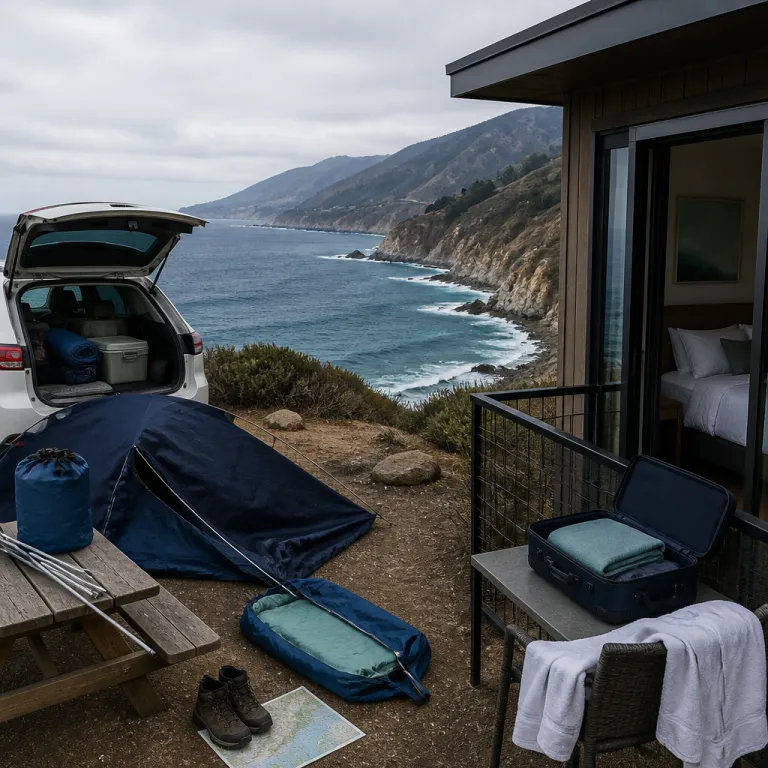
Why hotel guests should care about Big Sur camping with ocean views
Many travelers arrive in Big Sur expecting only classic rooms and a coastal resort, yet the most memorable stays often blend hotel comfort with a taste of wild camping. When you understand how ocean-facing campsites work in each state park and national forest area, you can choose a hotel nearby that gives you easy access to the same views without sacrificing a good mattress. This balance lets you enjoy the drama of the Pacific Ocean by day and return to a calm, heated room by night, with hot showers and a real breakfast waiting in the morning.
Think of your trip as a layered experience, where a refined hotel or lodge anchors you while selected moments of camping Big Sur style add texture and depth. You might book a room at a property near the Big Sur River or close to a creek campground, then plan one or two evenings at a campground located on the cliffs to experience Big Sur camping with ocean views up close. This approach works especially well if you are travelling with different comfort levels in your group, because some can sleep in the hotel while others stay at nearby campsites, then regroup over coffee on the deck or at a riverside café.
For hotel-focused guests, the deep subject here is how to use camping, campgrounds, and state park access as an amenity rather than a full lifestyle shift. Instead of choosing between a resort and a tent, you can treat Kirk Creek Campground or Limekiln State Park as extensions of your hotel’s outdoor lounge, accessed by a short drive along California’s Highway 1. The result is a coastal stay that feels both polished and elemental, with the best of both worlds framed by the sound of the ocean and the smell of woodsmoke drifting up from nearby fire rings.
Mapping the coastline: how parks and roads shape your stay
The geography of Big Sur is defined by a narrow road pressed between steep mountains and the Pacific Ocean, which means your choice of hotel or campground is always tied to Highway 1. Most of the classic Big Sur camping with ocean views sits either inside a state park or on national forest land, so understanding where each park lies along the road helps you decide where to sleep in comfort and where to spend your days outside. Hotels tend to cluster near the Big Sur River and around Pfeiffer Big Sur State Park, while many ocean bluff campsites lie several miles south toward Limekiln and Kirk Creek.
Driving this coast is part of the experience, and the standard pattern for many guests is to base at one property and then use a short drive to reach different parks. From the village area near the Big Sur River, you can head south past Julia Pfeiffer Burns State Park, then continue several miles south again to reach Kirk Creek Campground and Limekiln State Park, each offering different styles of camping Big Sur travelers appreciate. If you prefer to arrive from the south, you might start in San Simeon, follow the coastal highway north, and treat the entire road as a scenic corridor linking hotels, campgrounds, and beaches, with frequent pullouts for photos.
Because the terrain is rugged and the road can be slow, distance in kilometres matters more than it would in a city. A hotel that looks close to a creek campground on a map may still require a careful drive along winding cliffs, especially at night or in fog. Planning your stay means pairing your chosen resort or inn with one or two nearby campsites, so you are never more than a short, safe drive from your bed or your tent, and you can time your drives to daylight hours whenever possible.
Key ocean view campgrounds and how they pair with hotels
For travelers curious about Big Sur camping with ocean views, three names come up repeatedly because they sit so close to the water. Kirk Creek Campground, often shortened to Kirk Creek, is a creek campground located on a grassy bluff above the Pacific Ocean, with 33 campsites that look straight out to sea. Many hotel guests book a room inland, then reserve one of these campsites for a single night to experience the sound of waves without giving up their hotel base for the entire trip, often paying a nightly fee in the range of a modest motel rather than a luxury resort.
Farther south, Limekiln State Park offers 29 sites tucked between redwoods and a narrow beach, giving camping Big Sur visitors a mix of forest shade and ocean access. Some of these campsites sit near the creek, while others are closer to the beach, and guests staying at a resort or lodge up the road often drive down for the day to enjoy the park’s short trails and shoreline. Julia Pfeiffer Burns State Park is different again, with only two environmental campsites perched high above the ocean, and these Pfeiffer Burns sites are often booked the moment reservations open because they combine seclusion, dramatic cliffs, and direct views of the Pacific.
Closer to the main village, Pfeiffer Big Sur State Park does not offer direct ocean views, yet its riverside campsites and proximity to hotels make it a strategic base. Guests staying at nearby properties or at Fernwood Resort can walk or take a very short drive into the park, then continue south later in the day to visit Kirk Creek or Limekiln State Park for those dramatic ocean vistas. In practice, many visitors pair a hotel near Pfeiffer Big Sur with one night at an ocean-facing site, creating a varied but still comfortable itinerary that alternates between redwood shade and open coastal bluffs.
Balancing comfort and wilderness: choosing between rooms and campsites
When you are used to hotel standards, the idea of camping can feel like a step too far, yet Big Sur makes it surprisingly compatible with comfort. Most developed campgrounds in each state park offer a standard mix of picnic tables, fire rings, and restrooms, while your chosen hotel or resort provides the hot showers, fine linens, and dining that campsites cannot. The art lies in deciding how many nights you want to spend under canvas versus in a room, and how far you are willing to drive between them, especially if you are travelling with children or anyone who tires easily.
One effective pattern is to book a hotel for the full duration of your trip, then add one or two nights of camping Big Sur style as optional side adventures. You might, for example, stay at a property near the Big Sur River or Fernwood Resort, then reserve a site at Kirk Creek or at a campground located within Limekiln State Park for a single night, returning to your room the following evening. This way, you enjoy Big Sur camping with ocean views without committing your entire holiday to sleeping outdoors, which is especially helpful if weather turns or if someone in your party prefers a bed and a guaranteed hot shower.
Another approach is to treat the coast as a linear journey, starting in San Simeon and moving north, alternating between hotels and campsites as you go. You could spend one night in a hotel in San Simeon, then drive about 65 kilometres north to a national forest campground, then continue to a resort farther up the road, using each stop to sample a different park or beach. Whichever pattern you choose, the key is to reserve both rooms and campsites early, using official reservation systems and checking typical nightly fees so your combined lodging budget stays realistic.
Practical planning: reservations, driving distances, and safety
Because the coastline is protected by a patchwork of state park units and national forest land, reservations are the backbone of any successful stay. Are reservations required for Big Sur campgrounds? Yes, reservations are strongly recommended due to high demand, and most state park sites are booked through a central online system while many national forest campgrounds use a separate federal platform. This applies especially to Julia Pfeiffer Burns, Limekiln State Park, and Kirk Creek Campground, where ocean-view sites are limited and often booked months in advance, with nightly camping fees that are usually far lower than nearby hotel rates.
Driving logistics matter just as much as bookings, because the road is narrow and winding, with few services between clusters of hotels, campgrounds, and beach access points. Plan your drive so that you reach your chosen campground located along the coastal highway well before dark, then return to your hotel or resort in daylight whenever possible, especially if you are unfamiliar with mountain roads. Distances that look short on a map, such as the stretch of road between Pfeiffer Big Sur and Kirk Creek, can feel much longer when you are navigating curves above the Pacific Ocean, and travel times often stretch beyond what navigation apps predict.
Safety also means respecting the natural setting that makes Big Sur camping with ocean views so compelling. Check for fire restrictions before lighting any campfire, follow all posted rules in each state park, and remember that cell service is limited or absent in many campsites and along long sections of road. What amenities are available at these campgrounds? Amenities vary; some offer restrooms, picnic tables, and fire rings, so your hotel room remains your most reliable place for showers, charging devices, and secure storage, while your campsite becomes a simple base for sunsets and stargazing.
Choosing the right area: north, central, and south Big Sur
Different stretches of the coast offer different balances between hotels, campgrounds, and access to the ocean, so it helps to think in three broad zones. The northern area around Andrew Molera State Park and Pfeiffer Big Sur State Park has the highest concentration of inns and lodges, along with riverside campsites and easy access to the Big Sur River and nearby trails. This zone suits travelers who want a hotel base first, with day trips to beaches and parks rather than long nights in a tent, and it works well for a first visit when you are still learning the rhythm of the coast.
Central Big Sur, roughly between Pfeiffer Big Sur and Julia Pfeiffer Burns, feels wilder, with fewer rooms but some of the best viewpoints over the Pacific Ocean. Here, you might stay at a small resort or cabin property, then drive south to visit Julia Pfeiffer Burns State Park for its iconic coastal scenery before continuing to Kirk Creek or Limekiln State Park for camping Big Sur experiences. Because campsites are limited, this central stretch rewards those who book early and who are willing to mix hotel nights with occasional camping, perhaps following a simple two- or three-night itinerary that alternates between a lodge and a bluff-top tent site.
The southern zone, stretching toward San Simeon, is quieter and more spread out, with long distances between each park, campground, and resort. Travelers often start or end their trip in San Simeon, then drive north for miles along the coast, stopping at a national forest campground or at Kirk Creek before continuing to hotels farther up the road. If you value solitude and uninterrupted ocean views, this south section can feel like the best-kept secret, especially when paired with a comfortable room waiting at the end of the drive and a final morning walk on the beach before you head home.
Key figures for Big Sur ocean view camping and stays
- Kirk Creek Campground offers 33 sites on a bluff above the Pacific Ocean, which makes it one of the largest ocean-facing campgrounds in the area and a prime complement to hotel stays inland.
- Limekiln State Park Campground has 29 campsites spread between redwoods and the shoreline, giving travelers a balanced option between forest shade and beach access during a multi-night trip.
- Julia Pfeiffer Burns State Park provides only 2 environmental campsites with direct ocean views, so these sites are among the hardest to secure and often require booking the moment reservations open.
- Reservations for many Big Sur campgrounds typically open about six months in advance, which means hotel guests planning a combined room and camping itinerary should align both bookings on the same timeline.
FAQ: planning Big Sur camping with ocean views alongside a hotel stay
Do I need reservations if I am mainly staying in a hotel?
Yes, you still need reservations for any campground you plan to use, even if most nights are in a hotel. High demand for Big Sur camping with ocean views means that walk-in options are rare, especially at Kirk Creek, Limekiln State Park, and Julia Pfeiffer Burns State Park. Align your campsite bookings with your room reservations to avoid gaps in your itinerary and to keep driving distances reasonable between each overnight stop.
Which area is best for combining hotels and ocean view campsites?
The corridor between Pfeiffer Big Sur State Park and Limekiln State Park works well for mixed stays, because it offers both established hotels and several campgrounds with ocean access. You can base in a lodge near the Big Sur River or Fernwood Resort, then drive south to Kirk Creek or Limekiln for camping Big Sur experiences. This keeps driving times manageable while still giving you access to multiple parks and beaches, plus a reliable room to return to if weather or road conditions change.
How far are the main ocean view campgrounds from hotel clusters?
From the main hotel cluster near Pfeiffer Big Sur, Kirk Creek Campground lies roughly an hour’s drive south along Highway 1 in normal conditions. Limekiln State Park sits slightly closer, while Julia Pfeiffer Burns State Park is roughly midway between them. Hotels near San Simeon are farther from these campgrounds, but they work well if you are travelling the coast in stages and want to break up the drive into shorter scenic segments.
Is cell service reliable in Big Sur campgrounds and parks?
Cell coverage is limited or absent in many state park campgrounds and along long stretches of road, even near popular beaches. You should download maps in advance, confirm hotel and campsite details before leaving town, and share your route with someone at home. This is another reason many travelers keep a hotel base, which offers more reliable connectivity and a fixed point to return to at the end of each day.
What amenities can I expect if I split my stay between a hotel and a campground?
Hotels and resorts in Big Sur provide standard comforts such as private bathrooms, heating, and on-site dining, while campgrounds usually offer only basic facilities. At most state park and national forest sites, you will find picnic tables, fire rings, and restrooms, but not showers or electricity at every site. Combining both options lets you enjoy the raw beauty of Big Sur camping with ocean views while still having a comfortable room for the rest of your trip, so you can fall asleep to waves one night and to quiet central heating the next.